


We are direct — no middlemen. That’s true everywhere we operate, but in Texas, “direct” comes with a specific legal structure that’s worth understanding before you buy. If you’ve looked at a single-family home we have in Dallas-Fort Worth or Houston and noticed the paperwork mentions an “assignment of contract” instead of a straightforward resale, this is why — and why it actually works in your favor as a buyer.
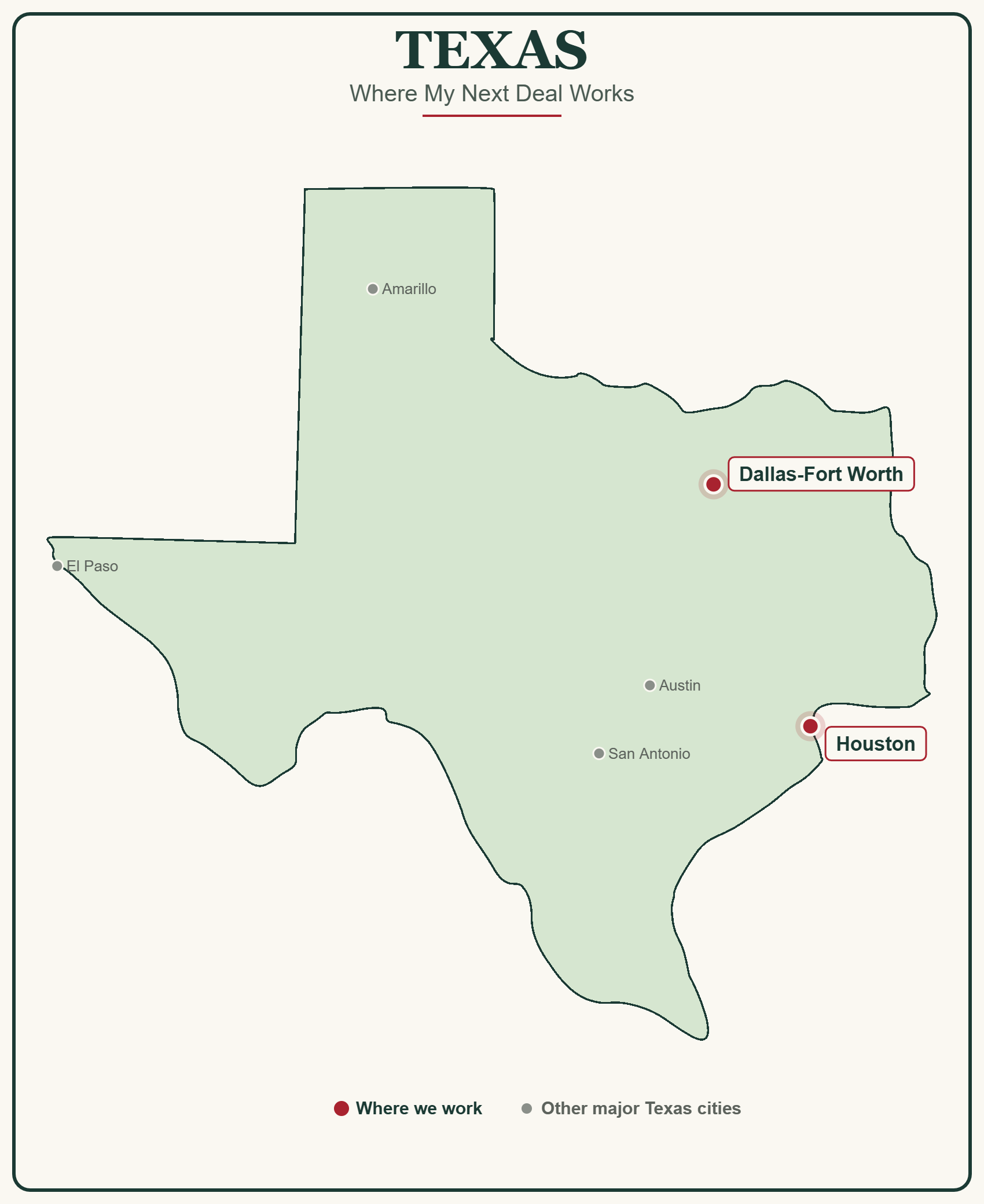
Dallas-Fort Worth and Houston: two different markets
Though we apply the same criteria everywhere — roof, insurance exposure, permits, and flood zone — Dallas-Fort Worth and Houston aren’t the same market, and it’s worth knowing the difference before you focus on either one.
Dallas-Fort Worth is really a cluster of cities and counties, not a single market. A property’s exact city, school district, and HOA situation can matter as much as the numbers on the contract, so we evaluate each one individually rather than treating “DFW” as one number.
Houston is spread wider and sits closer to the Gulf, so flood zone and drainage history carry more weight in how we evaluate a property there. It’s also where we currently have active single-family inventory in Texas.
Why Texas handles this differently than Florida
Every state regulates real estate a little differently, and Texas is stricter than most about who can market a specific property for sale, and how. Under Texas law, advertising a house — photos, address, asking price — as if it were being sold outright requires a real estate license. Investors who put a property under contract and pass that opportunity to a buyer, without ever taking title themselves, have to structure and disclose the deal correctly: what’s actually changing hands is the contract itself — an assignable interest in the purchase — not the deed to the house.
That’s the part some buyers haven’t seen explained before, so it can sound unusual the first time. It isn’t a workaround. It’s how Texas requires this type of transaction to be done.
What this actually means for you as a buyer
A few things are different from a typical resale, and all of them exist to protect you:
You’re stepping into an existing purchase contract, not buying from someone who already owns the home outright. In practice, that changes who’s technically on the closing documents, not the property you end up with.
Closing usually happens directly with the original seller, sometimes through what’s called a double closing — two transactions that close back-to-back through the same title company, on the same day. From your side as the buyer, the process feels the same: you close, you get your title, the home is yours.
Everything is disclosed in writing. Texas requires that both the seller and the final buyer be told, in writing, exactly what’s being sold and how. If a deal in Texas is being sold to you as simply “a house for sale” with no mention of any of this, that’s the version worth asking more questions about — not the other way around.

Why we structure deals this way
We’re not a marketplace relaying someone else’s listing, and we’re not hiding the structure of a deal from either side. We control what we bring to market directly, and in Texas, that control comes with a legal responsibility to disclose exactly how the deal is put together — to the seller and to you. It’s an extra step compared to how a Florida deal typically closes, but the principle underneath it is the same one we hold everywhere: you know exactly who you’re buying from and how the deal works, before you commit.
What to expect at closing
Your title company handles the closing the same way they would for any purchase — reviewing the contract, clearing title, and coordinating funding. The only difference is what’s happening one layer behind the scenes: whether the seller closes with us first and then with you, or whether both close together. Either way, your closing timeline and your experience as the buyer stay straightforward.
As with anything in real estate, every deal has its own details. We always encourage buyers to review the contract and the disclosure with their own title company or attorney before closing, so you go in with full clarity on exactly what you’re buying. If you have more general questions before you get there, our investor FAQ covers what we hear most often.
Looking at Texas right now
We currently work in the Dallas-Fort Worth and Houston areas, focused exclusively on single-family homes. Take a look at what’s currently available, or reach out directly with the Texas markets and price range you’re watching, and we’ll keep you posted as new opportunities come in.