

You are scrolling through listings and a property you have been watching suddenly shows a “Price Reduced” tag. Is that a green light or a warning sign? For an investor, a price cut is information, not a verdict. Knowing how to read it is what separates a good deal from a missed one.
Why Sellers Reduce the Price
A reduction rarely happens for just one reason. The most common ones are:
- The property has been on the market longer than expected. Time costs money, and a long listing usually pushes sellers to adjust.
- The seller’s situation changed. Carrying costs, a timeline, or a need to close faster can make flexibility more important than the original number.
- The first price was too ambitious. Market feedback sometimes shows that the original price was higher than what the numbers support.
- The condition became clearer. Once buyers have walked the property, repair needs can shift what the home is really worth.
What a Reduction Does and Does Not Tell You
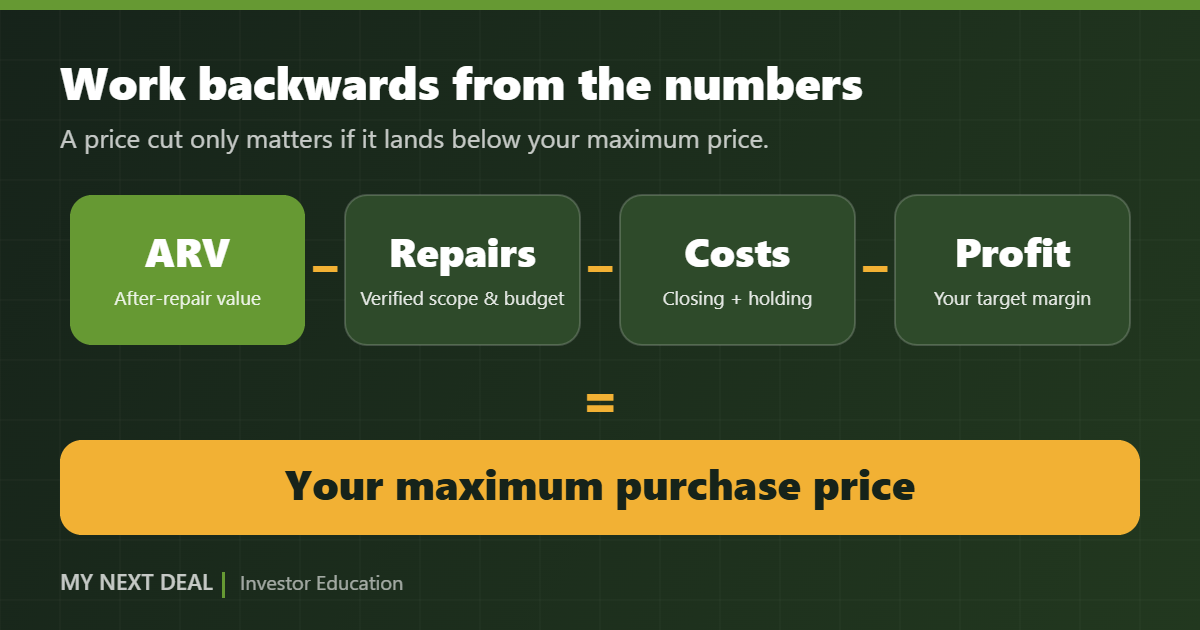
A reduced price tells you the seller is more flexible than they were before. It does not tell you the new price is a good price. Only your own numbers can do that: the after-repair value (ARV), the real repair budget, closing and holding costs, and the profit you need to make the deal worth doing.
The safest way to evaluate any reduced property is to work backwards. Start from the realistic ARV, subtract your costs and your target profit, and see where that leaves your maximum purchase price. If the new price is at or below that number, the reduction may have created real room. If it is still above it, a cut alone does not make it a deal.
Five Questions to Ask Before You Act

- How big was the reduction? If the listing shows the previous price, compare it with the current one. A meaningful drop says more than a symbolic one.
- How long has it been listed? Days on market help you understand how much leverage the seller may feel they have.
- Is the scope of repairs confirmed? Never rely on assumptions about condition. Verify before you build your numbers around it.
- What do recent comparable sales support? Use sold properties that are truly similar, not just nearby listings with optimistic prices.
- How quickly, and with what funds, can you close? A ready buyer with clear terms often has the advantage when a price drops.
Why Moving Prepared Matters
A price reduction tends to bring fresh attention to a property. Investors who already know their numbers, their funding, and their timeline can make a clear decision quickly, while others are still figuring out what to ask. Preparation is the real advantage, far more than any single tag on a listing.
How We Handle Reduced Properties at My Next Deal
At My Next Deal we work direct, with no middlemen, so you can talk straight to the team behind the deal. Properties with a price reduction are marked “Reduced” on our current listings page. Prices and details can change, so always confirm the latest information on each property’s page before you make a decision.
Ready to look at what is available right now? Browse our current properties and reach out to the team with your questions.